
12/04/23
Interview & Edit & Translation by Sara Hirayama
Photography by Julien Tell
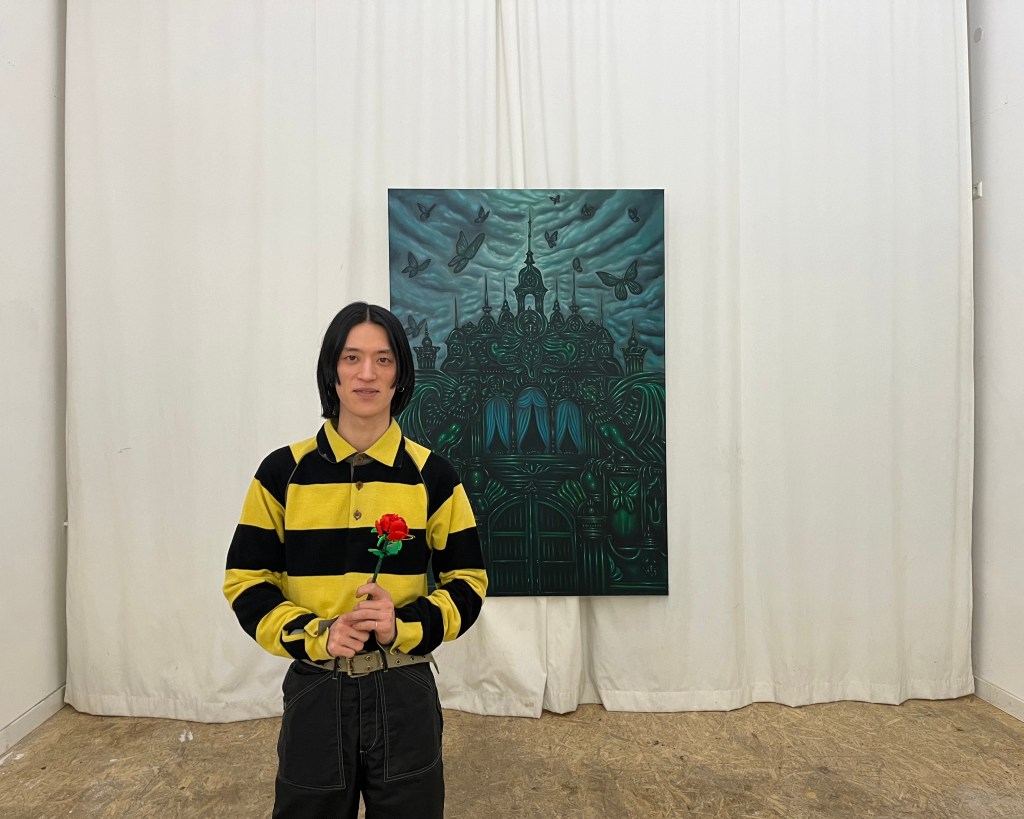
全面的に使用されるダークな色、悲しい表情をした男の子、角が生えたデビル。一見、暗闇の世界に引き込まれるような画風が特徴的な作品だが、実は希望が詰まっているのかもしれない。
Mainly used dark colors, sad little boys, and devils with horns. The artworks of painter artist, Ryo Koike may initially seem drawn into a world of darkness. However, hidden within might be a reservoir of hope.
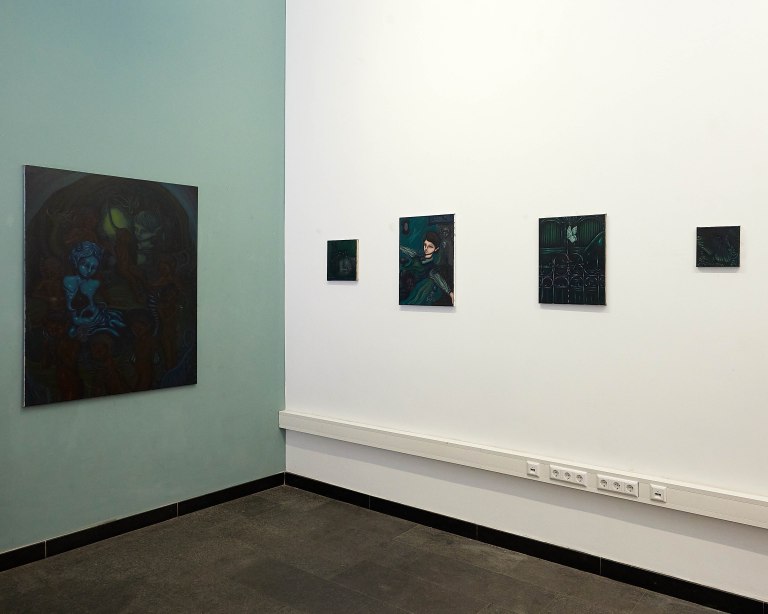
ベルリン・クロイツベルクの MOLT Gallery にて2023年11月3日(金)から3日間限定で、ペインターアーティスト・Ryo Koike の個展 Tempest が開催された。初日に行われたオープニングパーティは入場規制がかかるほどの大盛況に。落ち着いた最終日の昼頃、今回披露された18個の作品から数点、それぞれの意味や背景について語ってくれた。
In a three-day exclusive exhibition, ‘Tempest’ held at MOLT Gallery in Berlin’s Kreuzberg district from November 3, 2023. The opening party on day one was so wild they had to control the crowd. Around midday on the final day, Ryo Koike shared insights into the meanings and backgrounds of several of the 18 showcased artworks.

□ 初となる個展の開催おめでとうございます。まず、今回の展示はどういった経緯で決まったの?
まず絵を見てもらいたいっていうのがあった。これまで展示はしないで、売ることだけしてて。「もったいないから展示しなよ」って友達に言われたのがきっかけ。その子はアドバイザーみたいな子で、美術館とかギャラリーでずっと働いてる友達で。僕独学なんですよ。なんも学校とか行ってなくて、ましてやそういうギャラリーとかも持ってないから。そういうところで働いてる人から言われると影響力があるっていうか。一回売るのを中断して、とりあえず展示をすると決めた。別に個展じゃなくてグループ展でも全然よかったんだけど。そしたらこの話がきて、そこからフルスピード。2ヶ月ぐらい時間があって、ちょうど他の展示とかも重なったからずっとスタジオにこもりっきり。めちゃめちゃそれが好きなんだけどね。
□ Congrats on your first solo exhibition. First off, how did you plan all this?
I wanted to show my paintings. Up until then, I had only been selling them without exhibiting. One of my friends who works at art museums or galleries suggested that I should exhibit them so that I can have an opportunity to communicate with people. I’m self taught. I haven’t been to school or anything, and I don’t even own galleries. So I naturally took her advice, decided to pause selling for a while. It didn’t have to be a solo exhibition; a group exhibition would’ve been fine too. Then this opportunity came up, and it took off from there at full speed. With about two months of time and coinciding with other exhibitions, I locked myself in the studio the whole time. I really love doing that, though.
□ 絵を描きはじめたり、スタジオを持ちはじめたりしたのはいつ?
スタジオを持ちはじめたのは単純にアクリルから油絵にするっていう理由。小さい頃からスケッチとか鉛筆で絵を描くのが好きで。なにも考えずに普通に描いてた。そのときは親に「こういう絵は描かないほうがいい」って止められた。心臓とかに興味があって、解剖学的な体の中身とか、そういうのを小さいときに描いてて。なんでそれに興味があったのかはいまだに分からないけど。アニメの模写もすごい好きで、でも100%形になってるものを描くのがすごい苦手。目で見て分かってるからそれが100%にならなかったら気に入らない。いっつも描いて破って描いて破ってを繰り返してて。
中学校の途中からあまり行かなくなっちゃったから、専門学校しか行けないってなって。じゃあ絵がいいってなったけど、そこも取ってもらえなくて。もうそれからずっと絵は描いてなかった。趣味って言うのも恥ずかしくて、だから次に好きな服の仕事しようって思った。働きながらいろんな学生、特に美大の子と「羨ましいなぁ」って思いながら喋った。それからある分岐点で日本を離れたいって思っちゃって、人間関係のことだったりとか。一回スッキリしたいけど地元に戻るっていう選択肢がないから、でも東京にいてこれ以上どこか面白いとこあるのかなって思って。一番期待してたのに期待度が足りなくて。でもしょうがないやって思って、どこでもよかったけど、たまたまベルリンの話をされたからとりあえず来てみた。そこからいろいろな人の話を聞いて、みんな頑張ってていいなって思った。自分のキャリアとかバックグラウンドを気にしないで、堂々と自分のやってることを話せる人ばかりなのが羨ましくて。また絵を描きはじめたのが5、6年前ぐらい。そこからだんだんちょっとずつ大きくなって。油絵のことも知って、周りの話とか聞くようになって「やってみよう」って。やってる人は分かるかもしれないけど、筆とかも高いものを使っちゃうと後戻りができないというか、どんどんハマっちゃう。
□ When did you realize the love of painting, and how did you get to the point to have your own studio?
I began having a studio simply because I decided to switch from acrylic to oil painting. I’ve always liked sketching and drawing since I was little. I used to draw without thinking about anything. At that time, my parents stopped me from drawing certain kinds of pictures. I don’t even know why still to this day, but I had an interest in hearts or anatomy. I also loved copying anime drawings. Though I often got frustrated when I couldn’t draw 100% accurately. I didn’t like it if it didn’t match what I saw with my eyes because I knew what it was supposed to look like. I would always draw, tear up the paper, draw again, and repeat.
I stopped going to school during middle school, so my only option was to go to vocational school instead of high school. I chose art, but I couldn’t get into the school I wanted. I stopped drawing for a long time since then. Calling it a hobby felt embarrassing, so I started working as a vintage clothing shop staff. While working, I got to talk with many students, especially those that were studying art, feeling a bit jealous. Then at a certain point, I wanted to leave Japan, partly because of some relationship issues with people. I wanted a fresh start but had no option to return to my hometown. I wondered if there was more interesting stuff left in Tokyo. I had higher hope for the city, but it never satisfied me enough. And I just kind of decided to come to Berlin I’ve heard someone talking about. I talked to a bunch of different people, and I thought it’s cool that they’re living up to their passions. I respected them for truly enjoying things they love, without any judgment of backgrounds or careers. That’s how I was able to get back to painting again 5 to 6 years ago. Gradually, it became a little bigger and bigger. I started trying oil painting as well. If you’re an artist or creator, you know how there’s no turning back once you invest and start using expensive brushes – it becomes addictive.
□ ベルリンに来て絵を再開したばかりの当時は、なにを描いていた? どのように今の画風に変化していったの?
そのとき描いてたのは黒の鉛筆やインクでタトゥーのデザインっぽい感じ。蝶々を描いてたり。あんまり今のこういう感じの絵ではなくって。その後ペインティングに変えたときはアクリルで描いてたけど、そのときはもっとアブストラクト。全然自分でも理解ができない。だから見返したときに自分のなかで逆に嫌な思い出を引き出しちゃって。ちょっとこれ病気になっちゃうかもしれないって。爆発させてそのときラクになるのはいいけど、見返したときに辛くなるのが結構精神的にキツかったから。
そこからおとぎ話とかフェアリーテールにちょっとだけ転換させて。小さい頃からグリム童話がずっと好きだった。表面的な幸せしか見せてないけど、実は裏側に悲しいことがあったりとか。ましてやそれを大人が子供に向けて作ってる部分がすごい興味深くて。それを描きはじめてから自分のなかで理解できることがすごく多くなった。自分に起こってる状況とか、蝶々ってこういう意味だったんだとか。基本的にいつも愛とか友情関係、希望、願いとして蝶々を絵にすることが多いけど。でもやっぱりどうしても暗いって言われちゃう絵になっちゃうし、精神状態を聞かれることが結構多いんだけど(笑)。でもそれは自分のなかで “正直である” って意味でもあって。他人に対して正直になれないときって多分みんなあると思うけど。例えば、セラピーって1から100まで喋れるのに、友達に対しては50で止めちゃうみたいな。多分それってポライトネス(礼儀)が入ってると思うから。普通に喋って、悲しい気持ちにさせたくないからやめようとか。「全然大丈夫だよ」って言われても、信じてないわけじゃないけどそういうのがあると思って。絵を描いてるのって結構人と喋ってる気分になる。だからイコール、後からラクになる。すごい解放されてる感じ。感覚的には鏡を見てる感じがあって。でも対自分じゃなくて違う人に喋ってる感覚でもあるんだけど、”絵は心の代弁者” だなって。だから絵を通して話すと人から理解してもらえるのが結構嬉しくて。アクセプトしてもらえることとか。話を聞いてもらえることが快感的でそれが理由で描きはじめた。これが正解なんだって。終わった後もすごいスッキリするし、アブストラクトやってたときみたいな辛い感情もなく、悲しかった思い出だけど、そのなかにいつも希望があるっていうか。やっぱりみんなも悲しいままでいたくないと思うから。おとぎ話の逆で、悲しいところを表面的に出してるけど、裏側には願いとか愛とかの意味をもってる。それが自分の絵について一番分かりやすく言えるかな。
□ When you started painting again in Berlin, what kind of artworks were you making? How did you establish the style that you have now?
I was drawing with black pencils and ink, like tattoo designs. I liked drawing butterflies a lot. It was quite different from the style of my current artworks. When I was into acrylic painting, it was more abstract. I couldn’t even understand at all. All my abstract paintings brought back unpleasant memories within me when I looked back, to the point where I thought it made me sick. It must’ve felt really good while letting my emotions all out and feeling relieved in the moment, but just that. It was mentally challenging to look at what I painted most of the time.
Then I shifted my focus onto fairy tales. I’ve always been a fan of Grimm’s fairy tales since I was a kid. They show happiness on the outside, but there’s often sadness hidden behind it. And the aspect of adults creating these horrifying stories for children fascinated me. Since I started painting in these styles, I started knowing and understanding myself more and more; things that are occurring to me, or the meaning of butterflies. Although I often show butterflies as symbols of love, friendship, hope and wishes, my paintings are still described as dark, and people ask me about my mental state all the time haha. But this is a form of being true to myself. There are times for everyone when they can’t be completely honest with others. For example, you can talk about everything from 1 to 100 with a therapist, but you might stop at 50 with friends. Perhaps politeness is involved in that. You don’t want to make someone sad so you hesitate. Even if they say “it’s totally fine, you can talk to me”, it’s not that easy. And painting has a role of someone I can completely become honest to, and it’s so relieving after finishing up a painting. Feels nice. When I’m painting on a canvas, it’s kind of similar to looking into a mirror, but not at myself – more like talking to someone else. My paintings speak for my heart. I find it very satisfying when people understand me through my art, and being accepted or heard is pleasurable. That’s mostly why I keep painting. I’m very sure this is the right path for me. Unlike when I was doing abstract art, there’s no lingering painful emotion. Although the memories may have been sad, there’s always hope within them. I think anyone wants to move beyond sadness. In a way opposite to fairy tales, I express the sad parts outwardly, but there’s meaning in the underlying wishes and love. That’s probably the most straightforward way to describe my art.
□ 絵を描くときに意識していることは? どんなことを表現している?
体と心のバランスとか、細かいニュアンス的に上手く伝えられないことを絵にしてることが多くて。なんで心と体が離れてるんだろうみたいな、ちょっと一致してないとき。絵を描いてるときに体は動くのに全然気に食わなかったりとか、脳ではやりたいと思ってるのに疲れがあってとか。自信もそうだし。例えばよくあるのが、言わなくていいことを一言つけちゃったりして、5秒後に「あ、やっちゃった」みたいなときって、体と心が勝手に離れてる状態で行動してる。もしかしたら誰もが感じてるかもしれない、心と体のセパレーションみたいな。
基本的に絵の中で服を着てる人間っぽい形をしてるのは、自分の体の代弁者。もうちょっと天使っぽいのとかピクシーとか、お人形とかは自分の心の部分が出てて。なにか物だったり建築物だったりの絵は、感情を表してる。描きはじめたときは自分で理解してなかった。
□ What do you express through your paintings?
I often express the balance between the body and mind, in which it’s hard to explain in words. I explore the feeling of when the heart and body seem to be disconnected. Like when my body’s capable of making lots of paintings, I like none of them. Or, when my brain tells me that I wanna paint but my body’s actually exhausted. It can also be about confidence. An example many of us may relate is that we add an unnecessary sentence in the end. Only 5 seconds later, you notice what you’ve done wrong, you know. It happens because your body and mind are separated when taking actions, as many of you may have experienced before.
Generally in my paintings, human figures often wearing clothes represent my own body, and other figures that look more like angels, pixies or dolls reflect my inner self. Paintings featuring objects or buildings convey emotions. I didn’t fully understand all this when I first got into painting.
□ 今回の展示名であり、目を惹く大きな作品のタイトルでもある Tempest にはどのような意味が込められているの?
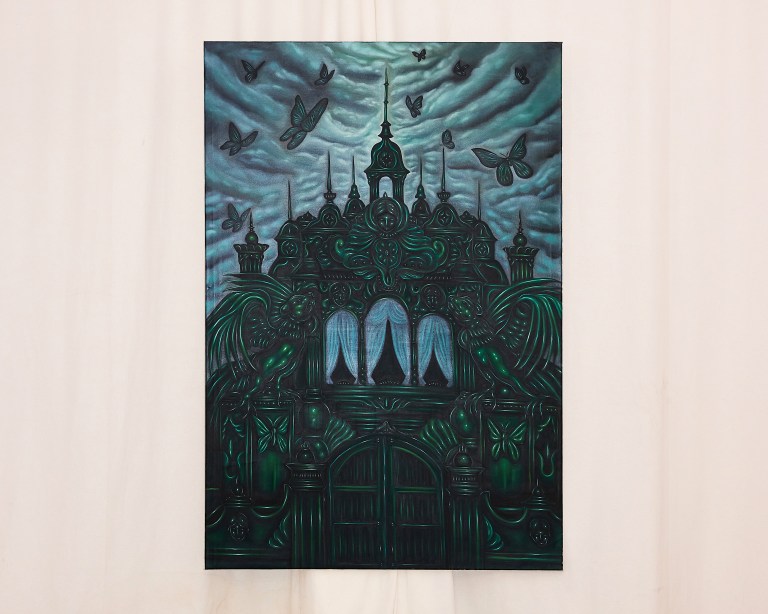
展示のテーマはストーム。嵐がテーマで、シェイクスピアの『テンペスト』から名前をとってる。ストームは雷や音、暗さから鬱のシンボルとして例えられるらしい。たまにそういうトラウマを思い出させたりとか、怖さがあったりとか、それって感情とすごい似てるなって。感情の起伏とかも。晴れてたのに急にくるみたいな。「昨日楽しかったのに今日はすごく悲しい」とか。そのループにハマると抜け出せないまま、ずっとぐるぐるしちゃう。けど、急に晴れる。個人的にはそういうちょっと悲しい感情とかって勝手に建築されちゃう。もしかしたらトラウマがある人は感じることかもしれないけど、一個悲しいことがあったら、それが直接的に繋がることじゃないのに積み木みたいな感じでどんどんトラウマの置物をおいてっちゃう。どんどん重ねていって、土台がもう大きいから崩れることもなく、結局すごい小さいトラウマを最後に繋げちゃうみたいな。その状況を建物に変えたって感じ。だから中身は空っぽみたいな感じにして。
横にいるのはメソポタミアの神話、ズーっていう神様なんだけど。嵐の神様で、分かる人は分かるかなと思って。でも蝶々とかは基本的愛とかそういう意味がこもってるから。一応出口を探してる。根本的には建物の底の部分を大々的に見せてて。飛行機とか乗ったら分かると思うけど、雨降ってるのに上の方まで行っちゃえば晴れてるみたいな。ストームの上には絶対光があるから、それに向かって “いつも出口を探す” っていうのがこの絵の一番のテーマ。
□ A large painting “Tempest”, which is the title of this exhibition carries significant meaning. Could you share the inspiration or intention behind it?
The theme of the exhibition is a storm. It takes its name from Shakespeare’s “The Tempest”. Storms are often symbolized as depression due to thunder, sound and darkness. Occasionally they can evoke memories of such traumas and fear. It’s similar to emotions in a sense: emotional ups and downs. The nice weather changes out of the blue. Or like “I feel very sad today even though I was full of joy yesterday”. Once caught in that loop, it’s hard to get out, and you go around in circles. But you’ll get to see the sun at some point. Personally I think sad emotions kind of keep building on their own. Those who have experienced trauma might relate to this, but even if it’s just a single sad event that happened to you, it becomes one of the blocks of a miserable tower you’ve already built in the past. And it’s so massive that it doesn’t easily collapse, ultimately a very small trauma can pile up on the top. Yeah, that’s the story, and that’s why I made it look empty inside.
And there are statues of Zu, a deity from Mesopotamian mythology. It’s a god of storm, and I just thought people who are familiar with these things will catch that. Then the butterflies show the meaning of love and such. They are searching for the end of the storm. But basically the bottom part of the building is mainly shown. If you’ve been on an airplane, you might understand that it’s sunny over the clouds even if it was raining. There’s always light above the storm, and the main theme of this painting is always to search for an exit towards that light.
□ 全体的に暗い絵だけど希望に満ちているね。他の作品についても聞かせてほしい。
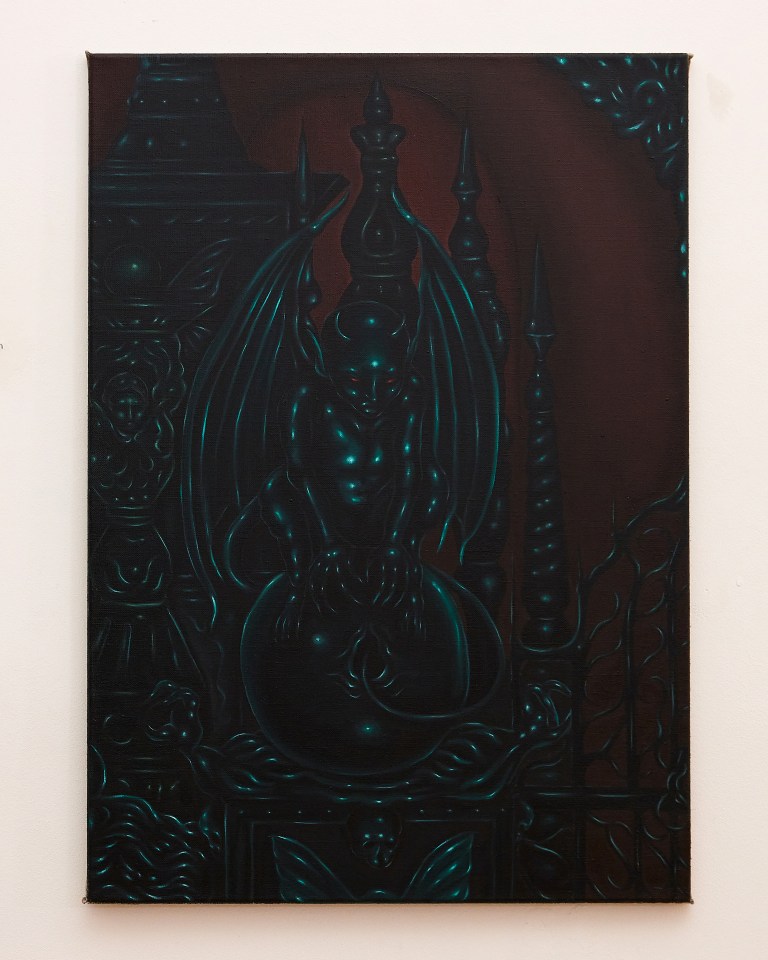
ガーゴイルって知ってます? すごい古い教会とか、お城とかのデコレーションで見られると思うんだけど。今の建築って水がちゃんと通るようになってるけど、昔のお城とかって平べったい状態で、そうなると水が上にたまっちゃって、そのダメージで建築が壊れちゃうから、水を流す場所を作んなくちゃいけなくて。それを作るときに隠すデコレーションが必要だった。そこでガーゴイルを使いはじめて。自分の絵の中でツノが生えてる子とかデビルとか描くときって、周りが思ってるような悪い印象じゃなくて、どっちかって言ったら悲しみの象徴で描いてて。それはみんなが持ってる捉え方でそう思われてるだけで、本人たちの意思がなくてもそう思われちゃうっていう意味を込めて昔よく描いてることがあったけど。「あんまりよくないよ」って言われるから描くのやめてんだけどね(笑)。
今回このときは、すっごい泣きたいのに泣けないときがあって、涙を流したいとき。ただ涙が出ないなって思ってたときにガーゴイルの話を思い出して。自分の目の上にガーゴイルがいて、涙を吸いとってるんだっていうのを頭の中で解釈をして。涙も水だから。最初はすごくいい意味だと思った。だから泣かなくて済むんだって。自分がもつデビルの印象は、悲しみだったりするから。助けてくれてるというか、自分のサイドにいてくれてるって思ってるけど。でも後々絵を描き終わってすごい面白かったのは、自分が泣けないって思ってる状態って、その時点で悲しいことだと思って。すごい楽しくて友達と笑ってるときは「やばい泣けない」って思わないから。泣けないって思ってるイコール、泣きたいぐらい自分をホールディングしてるみたいに。泣けないぐらい涙が溜まってるっていう状態。
□ Your paintings are dark, but also hopeful. Please tell us more about your other pieces.
Have you heard of gargoyles? You’d see them as decorations on really old churches or castles. The buildings now have proper water drainage, but in the past, castles were kind of flat, causing water to accumulate on top. This would damage the building, so they had to create places for the water to flow, and they needed some sort of decoration to conceal them. That’s when they started using gargoyles. When I paint characters in my paintings with horns or devil-like figures, it’s not about the negative impression that people may have. Rather, I represent them as symbols of sorrow. It’s just the way everyone perceives them, being labeled that way even without their own intentions, and I used to draw them to show that. However, I stopped drawing them because people would say “That’s not good” haha.

□ 体の一部が失われている人物/キャラクターはなにを表現している?
人形だね。自信的な部分を表したくて。人形にしてるっていう一個の理由として “壊れやすい” 。物だから。壊れやすいものの表しで、パーツを外すことがあるけど。それは結構自信とかにもつながってて。このタイトルは 自由の制限 (Restricted Freedom) っていうけど、自由になるには自信が必要だと思ってて。拷問って要は人を痛めつけることだけど、違う捉え方をすると “自由を制限すること” でもあるから。人から自由を奪うもの。これは自分自身に対しての拷問みたいな感じ。自分が殻から出たくても、自分でロックしちゃってる状態。でもその中から出たいのに自信がないから鍵を取ることができない。その鍵を掴む腕もなければ、みたいな。足は捕まってるから助けることも動くこともできないし、いざ動ける状態でも自信がなくて手がないから、この檻から出ることもできないっていう。
□ What do these figures, without a part of their bodies, express?
Oh the dolls. I wanted to show the aspect of confidence. One reason for the figure being a doll is its fragility because it’s an object. It represents something fragile, and I lose some parts of them sometimes. And this is quite connected to confidence. The title of the painting (↑) is “Restricted Freedom,” and I believe confidence is essential to get freedom. Torture is essentially about causing harm to people, but looking at it differently, it’s also about “restricting their freedom”. It’s taking freedom away from people. This feels like a form of self-torture. Even though I want to break free from my shell, I’ve locked myself in. But even if I want to, I lack the confidence to unlock it. It’s like not being able to grab the key because the doll is missing an arm, and its leg is getting caught.
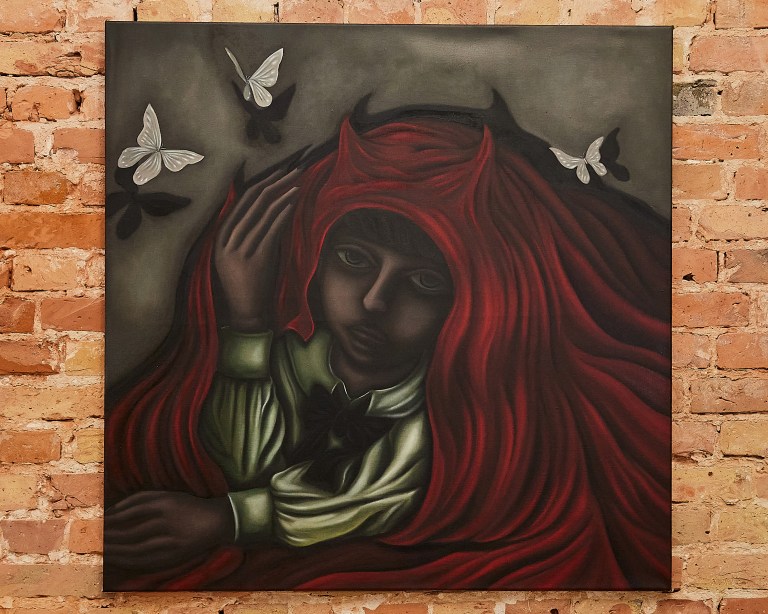
□ 自分に自信がないと自由を感じられないっていうのは共感できるかも。
この絵は「サイクルだね」って言われて、たしかにって思ったもの。普通に狼男と赤ずきんちゃんの話を自分の自信にかけたっていうか。自信とか、人とコミュニケーションとりたくないときとか。たまにそういう周期がきちゃう。自分のなかでそれがくるって分かってて、だから隠れたいみたいな。狼男って満月のときに隠れたいから。でもどうやって隠すんだろうって思ったときに、赤ずきんちゃんのこと思い出して。おばあちゃんが食べられちゃって、隠れてて。だから狼男に赤ずきんを被せてる状態だったんだけど。これを 満月の呪い (The Curse of Full Moon) っていうタイトルにしてて。満月もサイクルだから、なるほどって鳥肌が立った。
□ 意味やストーリーを考えてから描きはじめてるわけではないんだよね。
自分の中でもちょっと不思議で、いつも計算ずいて描いてない。どっちかといえば記憶がいつもない状態に近いっていうか。「どうやって色選んだ?」って聞かれても分からない。まあでもこれがいいとか思ったり、そのときそのときあるかもしれないけど。具体的に計算ずけて「ここにこの色」とかって感じよりは、そういうふうにやってるから。もしかしたら後々こうやって見たときに自分の中の解釈で絵を見て文章をつけてるだけかもしれなくて。上手く物事を言い回してるだけかもしれないけど、知らない間に話が上手くコネクトする。だからああいう蝶々とかつけてるのはわざとだし、なんでかってそんな状態でも「友達の愛はアクセプトしてます、見てます」っていうことを表したかったから。隠れているけど全てを隠してるわけじゃない。私はあなたのことも見ているっていうのがあって。
□ Interesting. There is definitely a relation between confidence and freedom.
My friend pointed at this painting (↑) and told me it’s about cycles, and I agreed. It’s about the classic werewolf and Little Red Riding Hood tale in relation to my own confidence. It reflects moments of self-doubt or times when I don’t feel like engaging with others – a kind of cycle that occasionally comes around. I always can tell when it comes, and want to hide. Werewolves want to hide during a full moon, and I thought of that story. The werewolf eats granny, and it hides. So, the werewolf is wearing Little Red Riding Hood. I titled it “The Curse of Full Moon” because the full moon is also a cycle, and it gave me goosebumps, like, “Ah, I see”.

□ 自己理解のための絵だけでなく、他者とのつながりも意識して表現しているんだね。
この絵の意味にもずっと気づかなくて。結局気づいたのが、ちょうど前付き合ってた彼女と連絡をとったとき。まあ別に関係性で言ったら普通によかったんだけど、別れることになったのもコロナ中ぐらいだったから。そうなるだろうなとも思ってたけど、でもお互い不満足のまま別れた。遠距離だったからそれしか方法がないみたいな。でも「いつか戻れたらいいね」みたいな軽い口回しで言ってて、こっちもそんなに真剣に捉えていたわけじゃないけど、なんとなくそういう話はしてて。こっちはこっちでデートするし向こうもしてただろうし。お互いアップデートはしてる状態だったけど、ずっと連絡とってなかったから。久しぶりに連絡をとったときに「実はもう新しい人と付き合ってるんだ」って話になって。急に置いてかれた感っていうか、はっきりと悲しいって言ったら悔しい気持ちになるからあれだけど、悲しさってよりも悔しさっていうか。そのときに複雑な感情を覚えちゃって。それを考えながらこの絵を見て「えっ」って感じになった。よく言うじゃん、リボンって赤い糸でつかまれてるみたいな。これは あなたのリボン (Your Ribbon) っていうタイトルなんだけど、ちゃんと俺はリボンを結んだつもり、繋がれてるつもりだった。それが外れちゃったのは知ってるけど、きっとこれは自分があなたのリボンをまだ持ってる、忘れられない気持ち。自分のなかで忘れてたと思ってたのに自分でまだ絡みつけてる。ちゃんとお互いの幸せを受け入れるべきなのに、そうやって自分がまだリボンを絡みつけてるから抜け出せない状態でいるっていうのが最近分かって、「うわーありがとう」って思った。そのときもちょっとだけ後付けかなって思ったのは、最初っから Your Ribbon っていう名前にするって最初から決めてて、でもそこですごい引っかかってたのが「誰のリボンなんだろう?」って。でも自分のリボンじゃないってことは分かってた。てことは誰かのリボンってなって、そのときに選んだ言葉が ”あなた” だったんだけど。本当にこれで合ってたのかなって思いながら「もうインスタあげちゃったし、しょうがなくこのままいこう」って思って。ずっと解釈できないままでいたけど、逆によかったそう言ってもらえてって感じ。
□ You aren’t only creating art for self-understanding, also consciously expressing connections with others.
I didn’t notice the meaning of this painting (↑) either. Eventually, I realized it when I chatted with my ex-girlfriend. Our relationship had beenfind, but we broke up during the pandemic. I kind of expected it, but we weren’t totally sure about the break up because we were long distance. But we casually said things like “it would be nice if we could get back together someday”. I dated other people here, and so did she. We hadn’t been in touch for a while. When we finally talked again, she told me that she started dating someone new. It felt like being left behind all of the sudden, and it wasn’t exactly sad, it was more of a feeling of frustration. At that moment, I experienced complex emotions. While contemplating all this, I looked at this painting and realized something. You know how they say, a ribbon is like a red thread of fate. This one here is titled “Your Ribbon”, and I thought I had tied the ribbon securely, thinking we were connected. I know it came undone, but surely, I still hold your ribbon in my heart, an unforgettable feeling. Even though I had forgotten it within myself, I’m still tangled with it. Despite knowing we should both accept each other’s happiness, I’m still holding onto the ribbon. I appreciated this realization though. I felt like I was putting words and an explanation afterward, but the title has been decided as “Your Ribbon” from the beginning, while wondering “whose ribbon is this?”. I was certain that it wasn’t mine so it had to be someone else’s. I wasn’t sure whose, but I’ve already uploaded on Instagram. And it’s been solved now.
□ しばらく時が経ってから理解したり、感謝できたりすることってあるよね。
人生で一番大変だった時期があると思うけど、そういう辛いときがあるからこそできるっていうか。いいことでもある。2021、22年は作品がさまよってた。必死に元気でいようとしてるみたいな。正直じゃないってことに気づいちゃって。その前の年の切り替わる瞬間ぐらいが一番自分が理解できる絵を描いてたから、絶対戻りたいって思って。それで2023年から戻った感じ。それも体と心のバランスじゃないけど、本当はこうしたいって分かってるのに体がまた抑制してみたいな。嘘つこうとしてるから。他の人に対しては見栄を張ってもいいけど、絵に対してだけは絶対正直でいようと思って。根本的な目的を忘れちゃいけない。人から好かれるってことよりも、絵に対して正直でいることを決めてたから。
□ There are things that you only understand or appreciate after some time has passed, right?
I think everyone goes through the toughest times in life, it’s during those difficult moments that you find the strength to step forward. It’s also a period of growth. In 2021 and 2022, my artworks seemed a bit lost. I was trying hard to look energetic, but I realized I wasn’t being entirely honest with myself. The year before was when I created pieces that truly reflected my understanding of myself, and I longed to go back to that state. And finally I’ve returned this year. It’s not just about the balance between body and mind, but more about wanting to express myself authentically, even when my body resists, as if trying to suppress the truth. I’ve decided that I’ll stay true to myself when it comes to painting, though I often put up a front with other people. I shouldn’t forget the fundamental purpose – to stay true to my art rather than seeking approval from others.
| 〈Ryo Koike〉 ベルリン在住のペインター。感情、無意識、透明な現実、図像などをおとぎ話を連想させるような世界観で表現する。 A Japanese self-taught painter based in Berlin. His artistic practice entails a translation of inner worlds, which include emotional, preconscious and translucid realities as well as charming arrangements and figurations His artistic practice permeates preconscious realms, fairy tales and the emotional movement of mind that translates into surreal landscapes and fusions that combine beings of this world and that of the supernatural. The painting itself becomes a shift gesture in which the subject dissolves, and the paper absorbs the painter as if he were the essence of fluidity, temperature and colour. A dark, enchanted and multi-layered world is interspersed with recurring themes and motifs, each signifying distinct worlds within the body of Ryo’s work. Within its frameworks, fantasy and reality coalesce – as they spark, transfix and interweave collective yet deeply personal imagination. |
 SP∞CE Magazine