
02/26/26
Interview & Edit & Translation & Photography: Sara Hirayama
アーティストとして生きるとはなにか。
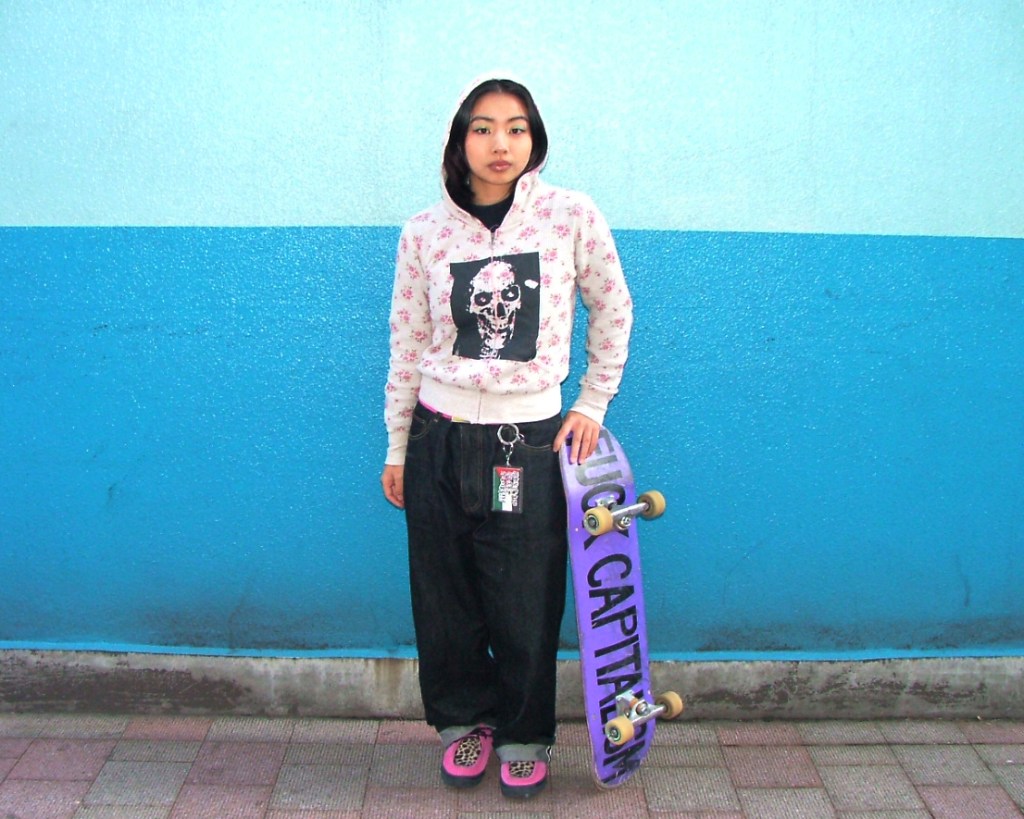
東京藝術大学在学中に出会ったスケートボードが、Natsukiの抱いていた問いにひとつの答えをくれた。生活の延長線上で生まれる創作の強さと誠実さ。評価や肩書きではなく、ただ「やりたいからやる」という衝動に突き動かされる表現。揺らぎながらも彼女が選びとった、これからの制作と生き方。その現在地を聞いた。
What does it mean to live as an artist?
While studying at Tokyo University of the Arts, Natsuki found one answer to the question she had long carried within her through skateboarding. The strength and sincerity of creation that emerges as an extension of everyday life. Expression driven not by evaluation or titles, but simply by the impulse of “I do it because I want to.” We spoke with her about where she stands now.
◻︎ まずは自己紹介からお願いします。
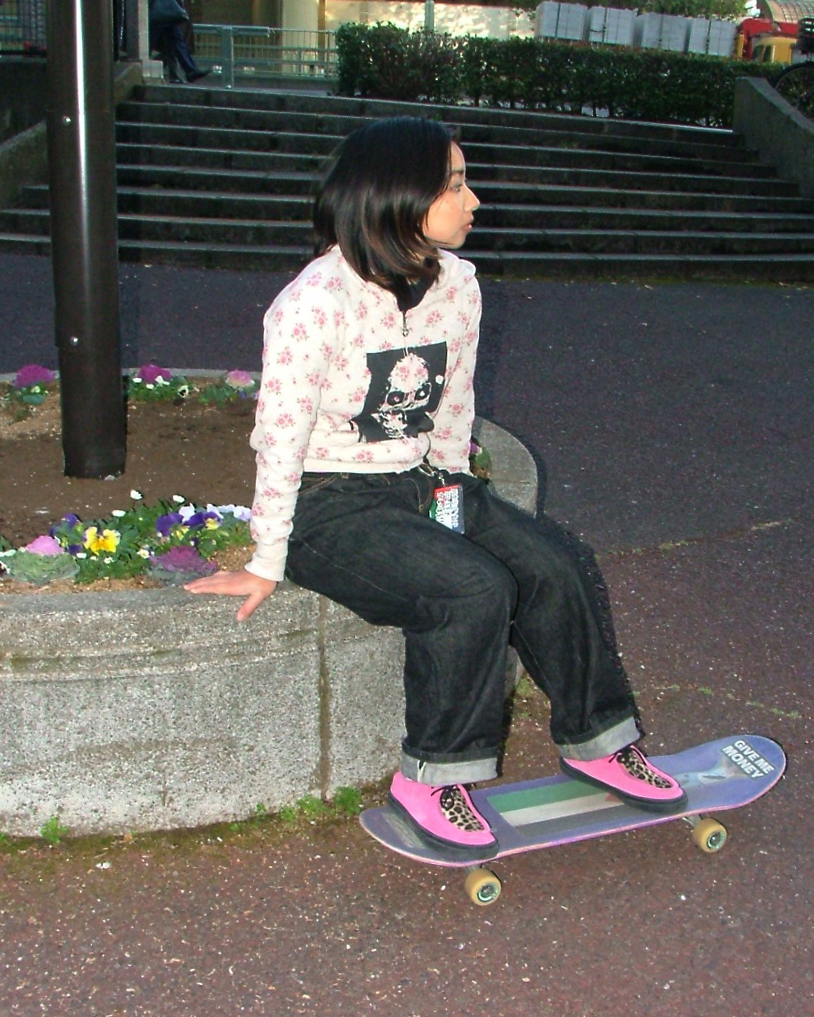
Matusmoto Natsukiです。スケートボードをしていて、駒沢にあるPURRBSっていうスケートショップで働いています。デッキにペイントしたり、映像作品を作ったりもします。生まれは大阪で、育ちは東京です。
◻︎ First things first, could you introduce yourself?
My name is Natsuki Matsumoto. I’m a skateboarder, and I work at a skate shop called PURRBS in Komazawa. I paint on decks and also create video works. I was born in Osaka and raised in Tokyo.
◻︎ 最近の主な活動は?
Snatch Factoryっていうコレクティブみたいなものをやってて、ポップアップやったりとか。4月11日に三重で初めてSnatch factory主催のスケートイベントがあるので、今はそれに向けて準備をしてるって感じです。
◻︎ What have you been up to recently?
I run a collective called Snatch Factory, and we do things like pop-up events. On April 11, we’ll be hosting our first skateboarding event in Mie under our name, so right now I’m mostly preparing for that.
◻︎ そもそもスケボーをはじめたきっかけはなに?
元々ずっと美術をやってて、映画と音楽も好きで。スケボーをはじめる前に見た “KIDS” と “Skate Kitchen” がきっかけかな。Clairoっていう女の子のシンガーが ”Skate Kitchen” の主題歌を歌ってて、それで気になって映画館で見た。「こんな世界があるんだ」って映画に影響受けて、スケートボードやりたいなって思ったかも。
◻︎ What got you into skateboarding in the first place?
I’ve always been into art, and I also love movies and music. I think the main trigger was watching KIDS and Skate Kitchen before I even started skating. There’s a singer named Clairo who sings the theme song for Skate Kitchen, and that made me curious, so I went to see it at the theater. I was really inspired by the world the movie showed, and that’s probably when I thought, “I want to try skateboarding.”
◻︎ どういう音楽を聞いてたの?
オルタナティブHip Hopをよく聞いてた。最初はオルタナティブロックが好きで、それこそClairoとかMac Demarcoとか。そこからFrank Ocean、Tyler the Creatorにいって。で、ASAP ROCKYに。
◻︎ What kind of music did you like listening to at that time?
I used to listen to a lot of alternative hip hop. At first, I was really into alternative rock – artists like Clairo and Mac DeMarco. From there, I got into Frank Ocean and Tyler, the Creator, and eventually I ended up listening to ASAP Rocky.
◻︎ どんなかたちで美術と向き合っていたの?
スケボーをはじめる前は、現代美術にずっとのめり込んでた。藝大(東京藝術大学)に通ってて。自分は現代美術のアーティストになるんだ!ってずっと思ってたんだよね。それを目指してひたすら作品を作ったりしてたかな。
◻︎ What was your relationship with art like?
Before I started skateboarding, I was completely absorbed in contemporary art. I was attending Tokyo University of the Arts, and I always thought, “I’m going to be a contemporary artist!” I spent all my time working toward that, just making artwork constantly.
◻︎ アーティストになる夢はいつから抱いていた?
それはけっこう小さいときからで。人とちがうことがしたいみたいなのはずっと思ってたから。
いろいろ変わったりはしたんだけど、ずっと絵を描くのは好きで、最初はイラストレーターになりたかった。そこからもっとアーティスト、美術家になりたいってなって。それには芸大(芸術大学)をまず目指さなきゃってなって。高校も美術高校だったから、ずっと絵を描いてて。高校生のわたしはいわゆる脳死状態で、「とりあえず芸大に行ったらアーティストになれる」って思って。だから予備校行って、藝大受験した。
◻︎ Since when have you had the dream of becoming an artist?
I think it started pretty early. I’ve always wanted to do things differently from other people. Things changed along the way, but I’ve always loved drawing. At first, I wanted to be an illustrator, and then I realized I wanted to become more of an artist, a visual artist. To do that, I figured I had to aim for an art university. I went to an art high school, so I’d been drawing all the time. As a high school student, I was kind of on autopilot, thinking “If I just go to an art university, I can become an artist.” So I went to prep school and took the entrance exam for Tokyo University of the Arts.
◻︎ 芸術大学に入って大変だったことは?
一番大変だったことは、大学にいろんな設備とかあったけど、その環境をうまく使えなかったこと。自分で動かないと大学って別になにもしてくれない。頑張って入っても、勝手にアーティストになれるわけじゃないから。自分で課題を見つけてやんなきゃいけないし、大学にいる意味みたいなものを見つけるのがけっこう大変だったかも。特にわたしは、大学にある設備を使わなくても作れるような作品をやってたから。余計ここにいる意味ってなんだろうって考えた。
◻︎ What was the most challenging thing about attending an art university?
The hardest part was that even though the university had all kinds of equipment, I couldn’t make full use of them. At a university, nothing happens automatically – you have to take initiative yourself. Just getting in doesn’t mean you automatically become an artist. You have to find your own challenges and work on them, and figuring out the meaning of being at university was actually pretty difficult for me. Especially because I was making work that I could create without using the university’s equipment, I kept wondering even more, “What is the point of being here?”
◻︎ それでも卒業できたのは、なんでだと思う?
真面目だったんだよね、基本的に。学校も欠かさず行ってたし。でも、スケボーに出会ったのも大学の2年生ぐらいのときなのね。それまでずっと現代美術やってたけど、ちょうどコロナぐらいになって、大学にまったく行けなかった期間があって。そのときにスケボーにのめり込んだ。その前からプッシュぐらいはやってたんだけど。友達にも会えなくなった時期に暇だから1人でできることと思って、スケボーをずっと1人でやってた。オーリーとか道の端で練習しはじめて。
芸大のみんなはだいたい大学院に進んだりするのね。卒業してもちろん就職する人もいるけど、就活って学校で教えられもしないし、そういうサポートもないから。だから普通に就職するっていう人は少なくて。やっぱり大学から一歩出たら何者でもなくなっちゃうじゃん。自称アーティストになっちゃうから、それがやっぱりみんな怖いし、心の準備ができないからだいたい院に進むんだけど。わたしはスケボーに出会って、「大学にいなくても作品を作ってる。これが自分のアーティスト活動」って思えた。生きていくこととセットで、ずっと制作し続けられるってことを確信した。そしたら早く辞めたいってなって(笑)。それがけっこう大きかったかも。だからさっぱり卒業して、働きつつ、スケボーで遊びつつ、作品ちょこちょこずっと作ってくみたいなことをしようって自信がついて、卒業できたって感じ。
スケートボードをテーマに卒業制作の作品を作って。基本的にほぼ1年間その作品に取り組むんだけど、自分が1年通して飽きずに作ることができたから、「あぁ、これが本当に自分が好きなことだな」って確信したかも。わたしはやっぱり一番スケボーが好きだなってなった。一生スケートボードに関わりながら制作もして生きていきたいと思った。
◻︎ Even so, what made it possible for you to graduate?
I guess it’s because I was basically a good student. I never skipped school. But I discovered skateboarding around my second year in university. Up until then, I had been fully devoted myself to contemporary art, but around the time of COVID, there was a period when I couldn’t go to university at all. That’s when I really got into skateboarding. I had tried a little before, but when I couldn’t meet my friends and had free time, I thought, “What can I do alone?” and I kept skating by myself. I started practicing ollies and other tricks on the side of the street.
Most students at art universities go on to graduate school. Some of course graduate and find jobs, but the school doesn’t really give you advice on job hunting or offer much support. So very few people just go straight into employment. Once you leave university, you’re nobody, you basically become a self-proclaimed artist. That scares a lot of people, and without mental preparation, most just go to graduate school.
But for me, skateboarding showed me that “I can keep making work even if I’m not at university. This is my artistic practice.” I realized I could continue creating as part of living my life. That made me want to leave school earlier haha. That was a big factor. So I gained confidence that I could graduate, work, skateboard, and keep making art little by little, and that’s how I made it through.
For my graduation project, I created work themed around skateboarding. I spent almost a full year on it, and because I never got bored, I realized, “This is really what I love.” I was convinced that skateboarding is what I love most. I want to live my life continuing to make art while staying involved with skateboarding.
◻︎ その大きなスケボー愛にどう気づいたのか、詳しく聞かせて。
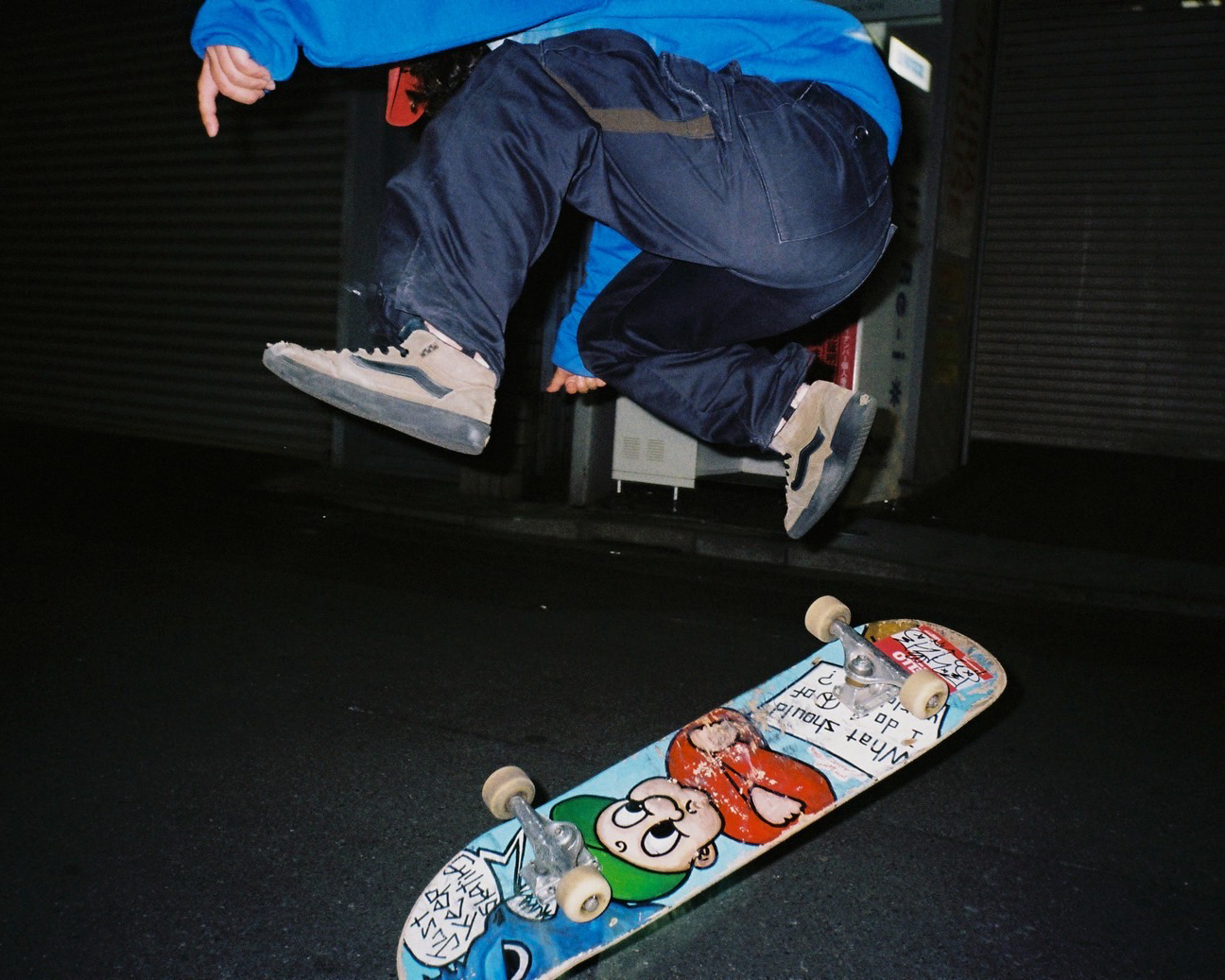
最初スケボーをひとりではじめて、ずっとひとりで滑ってたのね。家の一番近くで滑れるスポットが新宿の中央公園で、そのときコロナの時期もあって、スケーターもたくさんいたし、そこでローカルの子たちと知り合うようになった。そしたらいきなり友達がいっぱいできて、みんなめっちゃクリエイティブな子たちばっかりで。絵描いてたりとか映像作ってたりとか写真撮ってたりとか。
それにわたしはびっくりというか。久々にすれてない、ピュアな作品を見て。課題とかもなく、展示するとかでもなく、ただ作りたいから作ってるし、やりたいからやってるしみたいな。別にみんな超有名になりたいとかも思ってない。生活の延長線上で、つねになにかを作ってる人たちがそこにはいっぱいいて。それがわたし的にはカルチャーショックというか。こいつらのほうが本物じゃんって思って。わたしが今までやってきたこと、コンセプチュアルアートとかそういうのとかってなんなんだろうって考えさせられた。
社会に物が言いたくてずっと現代美術やってきてたけど、この人たちのほうが嘘がないというか。それに、周りの人たちの作品とかクリエイティビティを見て、わたしもこういうアートがしたいって思った。かっこつけてギャラリーで展示するとか、美術館で展示されるとかじゃなくて、生活に根ざして、作品を作るってことを今まで全然してこなかったから。制作を続けていくにはどうしたらいいかを考えた結果、今のスタイルに至ったって感じかな。
周りのスケーターからの影響でしかない気がする。スケボー愛も含めて。わたしはスポーツとしてのスケボーには、まったく興味がない。単純にかっこいいけど、ファッションとかも全部含めてカルチャー。スケボーって許容する力があるじゃん。ファッションも音楽もアートでもなんでも。それがすごい魅力的だなって思うから。こんなにどっぷりハマった。
◻︎ Can you tell us a bit more about how you discovered your love for skateboarding?
At first, I started skateboarding completely on my own and kept skating alone. The closest skate spot to my house was Chuo Park in Shinjuku, and this was during the COVID period, so there were a lot of skaters there. That’s how I started meeting the local kids. Suddenly, I had so many friends, and they were all incredibly creative – painting, making videos, taking photos.
I was honestly shocked. For the first time in a while, I saw pure, unpretentious work. No assignments, no exhibitions, nothing. They were just creating because they wanted to. Nobody was trying to become famous. There were so many people constantly making things as part of their daily lives. It was a culture shock for me. I thought, “These people are the real deal.” It made me question everything I had done so far – conceptual art and all that.
I had been doing contemporary art to express something to society, but these people were completely honest in their work. Seeing the creativity around me made me want to make this kind of art too, not showing off in galleries or museums, but rooted in life itself. I had never really done that before. Thinking about how I could continue creating led me to the style I have now.
Honestly, it’s all because of the influence of the skaters around me, including my love for skateboarding. I’m not interested in skateboarding as a sport at all. It’s simply cool, but I love everything about the culture with fashion, music, and art. Skateboarding has this amazing capacity to embrace everything, and that’s what I find so attractive. That’s why I got completely hooked.
◻︎ 芸術大学に行ってよかった点もあるよね?
まあ楽しかったよ、大学は。作品作ってるだけで卒業できるってすごいことだけど。
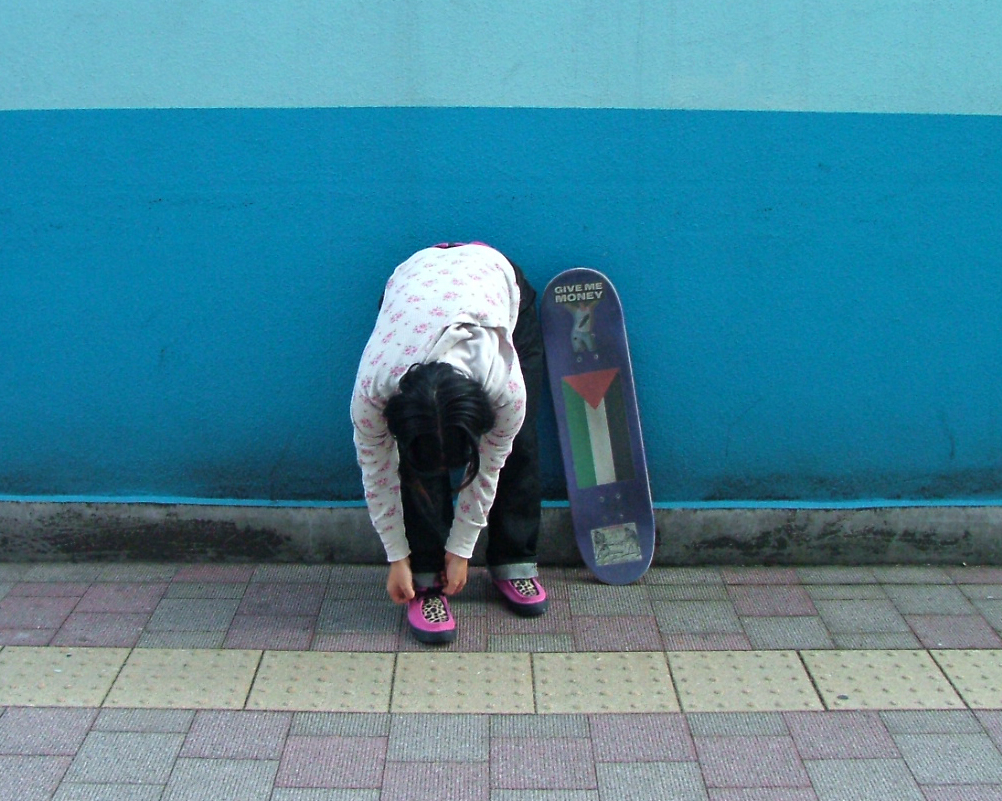
今になってよかったなって思うのは、芸術でつながった友達とか知り合いは、政治的なこととか、世界情勢だとか、いろんなことに関心がある。やっぱりそういう友達と話すと安心するというか。スケーターの友達はみんな、今を生きるので精一杯な人たちが多い。すごいマッチョなカルチャーでもあるから。やっぱり耳が痛くなるときとかもあるわけじゃない。大学で美術の勉強してたから出会った仲間とそういう話ができるのは、行ってよかったなって思うところ。
◻︎ There must have been something great about going to art university too, right?
Yeah, it was fun. Just being able to make artwork and get a degree is amazing.
What I really appreciate now is the friends and connections I made through art. They care about politics, world issues, and all kinds of things. Talking with friends like that feels reassuring. My skater friends, on the other hand, are mostly just focused on living in the moment. Skateboarding culture can be very macho, and sometimes it’s hard to hear things that come out from their mouths. Being able to have those kinds of conversations with people I met while studying art is something I really value. That’s a reason why I’m glad I went to art university.
◻︎ そもそも政治や社会問題に興味をもったきっかけは?
それはやっぱり現代美術が大きいかも。高校生のときにずっと油絵描いてたけど、現代美術ってものがあるのを知って。Chim↑Pomっていうアーティストが歌舞伎町で展示をやってて見たときに衝撃を受けて。「これもアートなのか!」じゃないけど、だいぶショッキングだった。
バンクシーにしたってChim↑Pomにしたって、社会に対してなにかメッセージをもって作品を作ってるから。社会でこんなことが、世界でこんなことが起きてるんだとか、構造自体がこうなんだとか、どんどん作品が教えてくれるじゃん。問題を定義してくれて、それでまた自分も調べたりとかして。それに対してどうしたらいいのかなって作品を見て考えられる。「綺麗だな」とか「素敵だな」じゃなくて、自分もまたひとつ学べるのがすごい。
だからわたしはそういう作品が好きで、そういうアーティストになりたいなって思って、藝大も目指したし、現代美術もずっとやってたから。
◻︎ What first got you interested in politics and social issues?
I think contemporary art had a big influence. In high school, I was always doing oil painting, but then I discovered contemporary art. I was really shocked when I saw an exhibition by an artist collective called Chim↑Pom in Kabukicho. I was surprised like “Oh, this is also art!” It was more like a total shock.
Artists like Banksy or Chim↑Pom create work with a message about society. Their pieces show you what’s happening in society or in the world, or even how the structures of society work. They define problems, which makes you want to research and learn more yourself. Seeing their work makes you think, “What can I do about this?” It’s not just about admiring something as beautiful. You actually learn from it.
That’s why I love that kind of work and why I want to be that kind of artist. That’s also why I aimed for Tokyo University of the Arts and focused on contemporary art all along.
◻︎ この社会で起きている問題や現実に対して、今の自分にはどういったアプローチができると思う? また、すでに実践していることは?
また言ってるよって思われるかもしれないけど、パレスチナのこととかはSNSでシェアできるときはシェアしてる。パレスチナで起きてることをどう自分ごとにできるかをスケーターに考えてほしくて、zine作って配ったりとか。「今まで知らなかったけどこういうことが起きてるんだね」って興味もってくれるスケーターとかもいて。少しずつではあるけど、自分が発信すること、活動することって大事だなって。スケートボードを通して、社会が少しでもよくなるように貢献したいなって思ってやってる。
男性だらけのスケートパークにわたしがそこにいるだけで、それはめっちゃ政治的じゃんって思う。本人たちは意識してないかもしれないけど、周りにいる子でもわたしはそう見てるから。女の子たちがスケボーしてるだけで、それはとっても政治的なメッセージだと思う。
◻︎ When it comes to the issues and realities happening in society today, what kind of approach do you think you can take? And is there anything you’re already putting into practice?
People might think, “Here she goes again,” but when it comes to Palestine, for example, I share what’s going on on social media whenever I can. I want skaters to think about how what’s happening in Palestine can feel personal to them, so I’ve made zines and handed them out. Some skaters have told me, “I didn’t know about this before, but now I’m curious.” It’s small, but I feel like speaking up and taking action really matters. Through skateboarding, I want to contribute in some way to making society even a little better.
Just being present in a skatepark that’s mostly full of men feels very political to me. The other girls there might not think about it that way, but from my perspective, it is. When girls are skateboarding, that alone carries a political message.
◻︎ これまでスケートデッキにたくさん自分で絵を描いてきたみたいだけど、どんなもの描いてきたの?
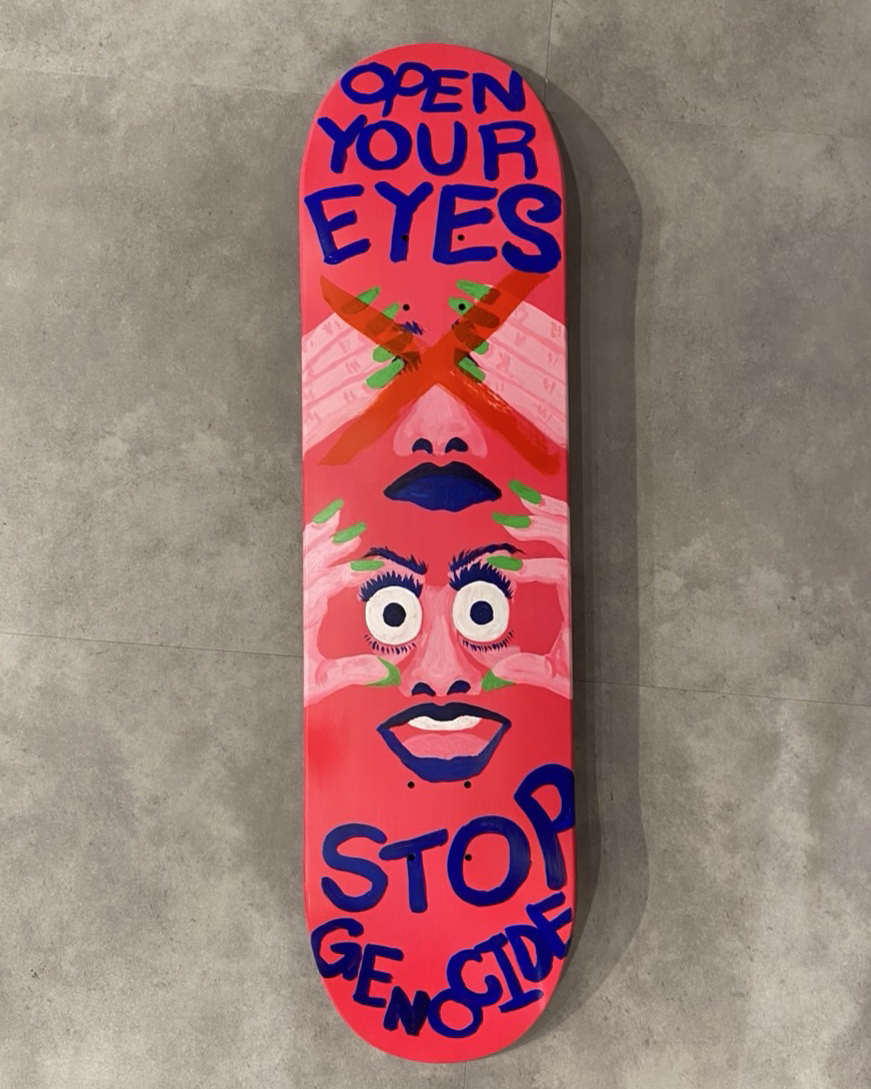
最初のほうは、お菓子とか看板シリーズ。サンプリングがあって、それを自分なりに文字って描いたりしてることがけっこうあって。ちょっとポップなもの、見たことあるけどなんかちがうみたいなデザインをずっとやってた。けど、最近はわりとメッセージ性が強いもの。自分が社会に対して言いたいことをデッキに描いてるかも。最近は特にそうなってきてる。滑っててもそうだけど、電車の中でスケボー持ったりするし。デモに参加するときに、なにもなくてもデッキ持っていけばいいじゃんと思って。
◻︎ I heard you’ve painted a lot on your skate decks. What kind of designs have you made?
At first, I did things like candy or sign series. I often sampled things and then put my own spin on them. I was making designs that were a little pop, familiar but somehow different.
Lately, my work has become more message-driven. I paint what I want to say to society on my decks. It’s especially like that now. Even when I’m skating, or carrying my board on the train, they show. When I go to protests, I figure, “Even if I don’t have anything else, I can just bring my deck.”
◻︎ 前に「お母さんと喧嘩してる」ってちょっと話してくれたけど、どんな家庭で育ったの?
めちゃめちゃ愛されて育ったよ。じゃないとさ、高校から美術高校行かせてもらえないもん。それで大学も美大って未来ないじゃん。就職とかないのに、アーティストになりたいとか言ってさ。なんでもやりたいって言ったことをずっと応援してくれる親だったから。愛されて恵まれて育ったなぁって思うよ。今も応援してくれてるとは思うし。
わたしの親がちゃんとした人だから。スケボー路上でさせろって言ってもさ、こちらに正当性がないから(笑)。ぐうの音も出ないというか。今までたくさん応援してくれた分、「やっぱりそこは応援できない」みたいな感じではっきり言われたときに、やっぱりぶつかって。なんでも許してくれてると思っちゃってたから。スケボーのイメージもあるし、急にわたしも変わってしまったから。スケボーにめっちゃハマって、「この子制作とか美術とかやめちゃうのかな」とか「今までやりたいって言って、ここまで頑張ってきたことなんだったの?」とかも親心としてたぶん思っただろうし。今もスケートショップで働きながら制作してるけど、自分の制作してるものとか、作った映像とか、もちろんストリートで滑ってるから、それを親に見せられないっていうか。本当は見せたいんだけど、見せられないのがちょっと悔しいなって思う。だから今、わたしがなにやってるかを親が分かってなくて。わたしも家を出てしまったし。
胸を張って「これが大作だ」って言えるものができたら親に見せたいなって思う。
◻︎ The other day, you mentioned you were fighting with your mom. What kind of family did you grow up in?
My parents gave me so much love. Otherwise, there’s no way they would have let me go to an art high school. And then art university too, where there’s no clear future in that, no guaranteed job, and I was saying I wanted to become an artist. They always supported whatever I said I wanted to do. I really feel like I was raised with so much love and privilege. I think they still support me now.
My parents are very proper, responsible people. So when I say I want to skate in the streets, I don’t exactly have the moral high ground haha. I can’t really argue back. After supporting me for so long, when they clearly said, “We can’t support that,” we clashed. I think I had assumed they would accept anything I do. There’s also the bad image of skateboarding, and I changed so suddenly from an art girl to a skate girl. I got completely into skating, and as parents they probably wondered, “Is she going to quit making art?” or “What was all that effort for, all those years she said she wanted this?”
Even now, I work at a skate shop while continuing to create. But because I skate in the streets and because of the kind of work and videos I make, I feel like I can’t really show them. I want to, but I can’t, and that’s frustrating. So they don’t really know what I’m doing now. I’ve moved out, too.
Someday, when I can confidently say, “This is a major work,” I want to show it to them with pride.
◻︎ どんなときに「スケボーやっててよかったなぁ」って感じる?
まじでずっと楽しい。メンタル的に救われるかも。体が疲れてたり、いろいろ悩んでたりしても、スケートしてる瞬間は忘れられる。携帯も触らないし、SNSも見ないし、その間だけはスケートボードと自分自身との時間が作れるというか。それがめっちゃスケボーしててよかったって思う瞬間かも。嫌なこととか辛いことがあっても、そのときは絶対楽しいから。
怪我したとき以外は楽しいよ。怪我したときは最悪だけど。痛くて最悪じゃなくて、スケボーできなくなるのが嫌なんだよ。全然スケボーできてないってなったときに、ちょっとプッシュするだけでもめっちゃ楽しいって思うし、「あぁ気持ちいい」みたいなね。
◻︎ At what moments do you feel grateful for skateboarding?
Honestly, it’s fun all the time. Mentally, it might even be saving me. Even if my body is tired or I’m stressed about something, the moment I’m skating, I can forget all of that. I’m not on my phone, I’m not checking social media. It’s just me and the skateboard. That’s probably the moment when I really feel glad I’m skateboarding. Even if something bad or difficult is happening, that time is always fun.
It’s fun all the time, except for when I get injured. When I do get hurt, it’s the worst. Not because of the pain itself, but because I can’t skate. When I haven’t been skating much, even just pushing a little gives me so much joy. It feels so good.
◻︎ Snatch Factoryを通じて達成したいことは?
映像は作ってる。ただのスケートの映像じゃなくて、もっと面白い実験的な作品を作りたい。上手いスケーターがここでなにしたとかは、わたし的にはどうでもいいのね。身近にいる友達とか、わたしがかっこいいと思う人がなにをしたかを記録したい。残したいってだけ。上手い下手とかは関係ないスケート映像を作りたい。別にスケート業界で評価されたいとかもないから。映像として面白いものを残したいとは思ってる。見てくれる人が全然いなくてもいいから、限られた人にちゃんと刺さってほしい。
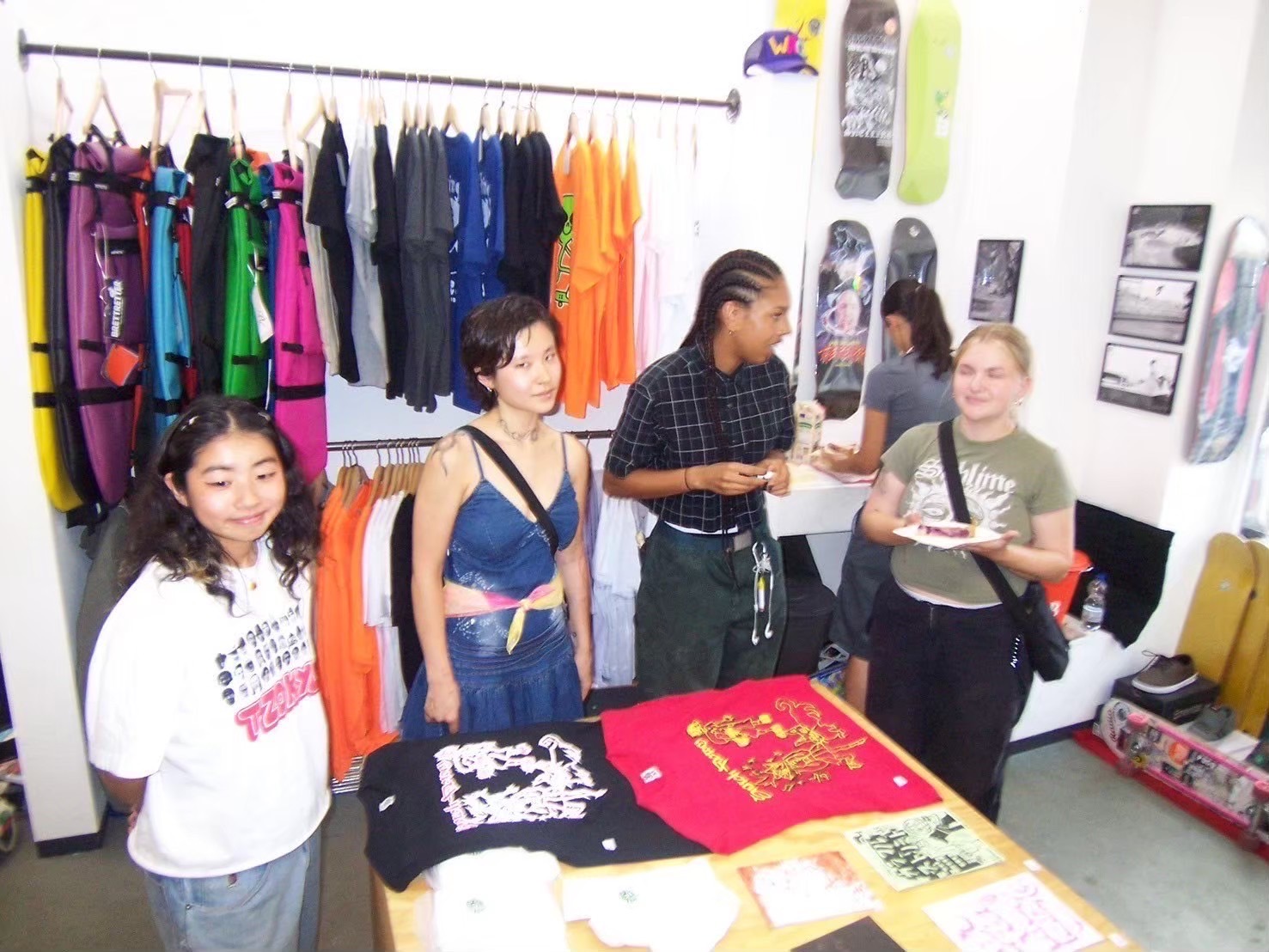
海外でポップアップとか、イベントをやっていきたいなとは思ってる。最近だとベルリンでポップアップをやったんだけど。それがわたし的にはめっちゃいい経験だった。今までこんなことやってる人全然見たことない。特に日本のガールズスケーターでこういう動きをしてる人は、わたしは今まで出会ったことがないし。これがかっこいいんだって自分が信じてるからこそ、でもやっぱりzineとか作品作ったりしても、あんまり興味をもってもらえないというか。それがめっちゃ悲しくて。でもベルリンに行ったら、みんなうちらのこと知らないのに「超かっこいいね」っていろいろ見てくれたり、パレスチナに寄付しますって書いただけでドネーションしたいからこれも買うよとか言ってくれたりとかするけど。
日本でこうやってパレスチナのためって言って動いても、みんな関心がない。環境がちがければ、自分たちがやってることをもうちょっと見てくれる、認めてくれる人がもうちょっといるのかなとも感じてて。あのポップアップさせてもらえたことが超いい経験だったし、すごい幸せな時間だった。
◻︎ What do you want to achieve through Snatch Factory?
I make videos, but I don’t want them to be just ordinary skate videos. I want to create something more experimental and interesting. It doesn’t matter to me if a really skilled skater does something cool. I want to document what my friends or the people I respect are doing. I want to record that. I want to make skate videos where skills don’t matter. I’m not looking for recognition in the skateboarding industry. I just want to create something that’s interesting as a video. Even if no one watches it, I want it to really connect with the people who do.
I also want to do pop-ups and events overseas. Recently, we did a pop-up in Berlin, which was an amazing experience for me. I’ve never seen anyone doing what we’re doing, especially among Japanese female skaters. Because I believe in what we’re doing, it’s frustrating when people don’t show much interest in our zines or work. But in Berlin, even though no one knew us, people were saying, “This is so cool,” checking everything out, and even donating just because we said it was for Palestine.
When we do similar things in Japan for Palestine, hardly anyone cares. It made me realize that in a different environment, more people might pay attention to what we’re doing and recognize it. Being able to do that pop-up was an incredible experience and a really happy time for me.
| <Natsuki Matsumoto> 東京都、1999年8月生まれ 東京藝術大学卒業。在学中にスケボーに出会う。 現在、駒沢のPURRBSスケートショップ店長。 デッキは毎回自分でデザインするのがモットー。 Born in Tokyo, August 1999. Graduated from Tokyo University of the Arts. She discovered skateboarding while in school. The manager of the PURRBS skate shop in Komazawa. Her motto is to design every deck herself. |
| <Snatch Factory> snatch factoryとして映像やzine、ポップアップなど活躍中〜!YouTubeも要チェック!! Videos, zines, and pop-up events. Check out our Youtube! |
 SP∞CE Magazine